focus:puller
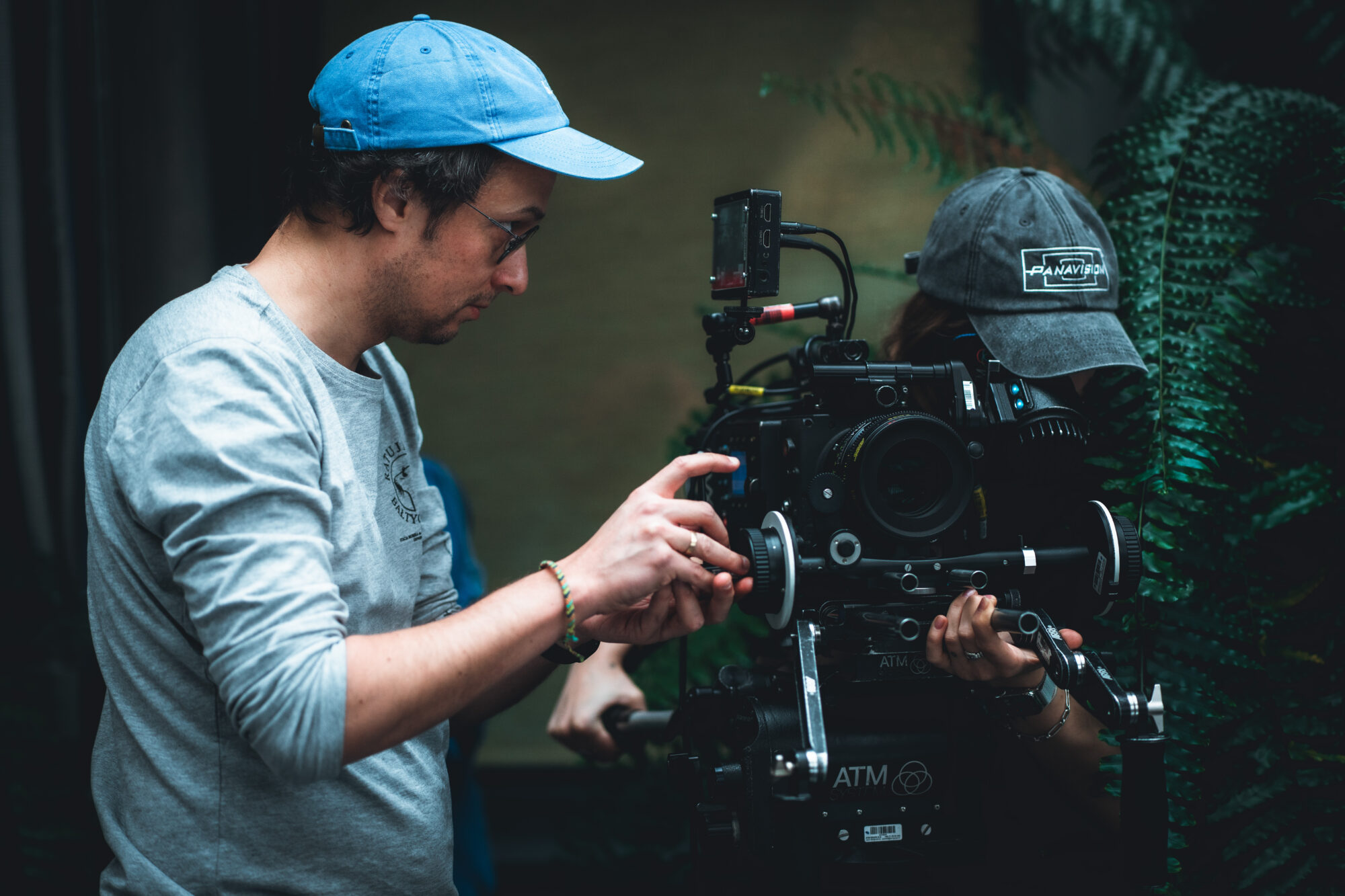
The workshop programme combines theory with intensive hands-on training using professional camera equipment. It includes, among other things, working with different focal lengths and apertures, remote focus control, changing lenses and filters, motor calibration, and cleaning optical elements. Special emphasis is placed on practical solutions and teamwork within the camera department, so that participants are prepared to work on a film set under demanding production conditions.
Day 1 – Fundamentals and Practical Camera Setup
-
Theory and practice of different camera setups (heights, angles, working from both sides of the camera).
-
Remote camera control and video monitoring (working with cable, gimbal, slider, platform).
-
Protecting equipment in difficult conditions (rain, cold, sun, humidity).
-
Working outdoors and indoors: night shoots, car rigs/driving shots, helicopter shots, boat shots.
-
Using monitors and video feeds, different types (OLED, TV), camera settings (ISO/sensitivity, frame rate, colour temperature).
-
Practical exercises: balancing the fluid head, leveling the tripod, manually pulling focus while moving.
Day 2 – Advanced Focus Puller Work
-
Depth of field, working with different focal lengths and apertures.
-
Remote focus pulling (WCU-4, mobile apps, original RED controllers).
-
Changing lenses and filters, motor calibration.
-
Handling and cleaning optics, filters, sensor.
-
Working with zoom lenses, macro, and detail shots in film.
-
Collaboration with the cinematographer and 2nd AD, actor marks.
-
Exercises: recording shots with remote control, playback of clips, working at different frame rates.
:staffhenryk:jedynak
He began his professional career in 1972, after graduating from the Phototechnical Technical School in Warsaw. Soon after, he joined WFD (Wytwórnia Filmów Dokumentalnych) on Chełmska Street, where the Camera Equipment Department housed the full range of production tools — from cameras and accessories to dollies stored in the warehouse next to the technical repair workshop. It was there that he gained his first hands-on experience, learning camera handling and mastering the craft of loading film magazines with negative stock.
Following his training, he started working on sets of the Polish Film Chronicle and documentary productions. From the beginning, he was especially drawn to work with “silent” sound cameras. Early ARRI models were notoriously loud, which led to the introduction of the blimp — a heavy soundproof housing paired with large 150 m and 300 m film magazines. Such setups required two to three people to carry and were most often used on tripods mounted on wheeled bases for controlled movement. He particularly enjoyed work in theatres and philharmonic halls, which he found far more appealing than chasing handheld shots with heavy batteries on his shoulder.
A major turning point came in 1975, when he was offered work on Krzysztof Zanussi’s feature film Quarterly Balance Sheet (Bilans kwartalny). Shot in harsh winter conditions in the mountains, it demanded both precision and resilience — including loading magazines inside a changing bag while travelling by sleigh. The production also marked the beginning of his collaboration with cinematographer Sławomir Idziak, then a young and exceptionally demanding talent. At the time, there were no video assist monitors and no wireless remote focus systems; the camera team relied purely on skill and coordination — one person operating while looking through the eyepiece, and the other pulling focus manually with a follow focus.
After completing the film, he joked that he had had enough of such intense collaboration — only to spend the next two decades working closely with Idziak. Together they made around 20 feature films in Poland and internationally, including productions in Germany and the UK, as well as shoots in India, Ecuador and Ireland — an achievement that was far from common at the time.
During his years at WFD, he also had the opportunity to attend cinematography courses, and several of his colleagues went on to become cinematographers. He chose a different path: he believed that as a camera assistant he could remain continuously active in production and continue travelling widely — something he deeply valued, especially during aerial shoots — whereas becoming a cinematographer might have brought fewer projects and long periods spent at home. Looking back, he remains fully confident in this decision.
Over the course of his career, he worked on numerous international productions, including Harry Potter and the Order of the Phoenix, Black Hawk Down, and King Arthur (a complete list of credits is available on IMDb). He also collaborated with other internationally recognised cinematographers and regularly worked abroad.
After 50 years on film sets, he reflects on a career defined by constant technological change — from analogue film negative to today’s digital cinema cameras. Yet despite the evolution of equipment, many fundamentals remain the same. Lenses — now available in countless versions — still use geared focus rings for manual and remote control. And while there have been persistent attempts to replace the focus puller with automated, computer-controlled systems, these solutions remain imperfect. For now, the focus puller remains an essential part of every professional camera team.
Read on...